

 1
1
 0
0
As of 2024, more than 56% of the world population resides in urban agglomerations, and it is anticipated to reach almost 70% by 2050 (United Nations, 2019). This hasty urbanization without the consideration for sustainable ecological architectures have resulted in sprawling slums, scarcity of resources, increased emissions, and a severe housing crisis in both developed and developing countries. The building sector alone is responsible for almost 39% of worldwide carbon emissions, and it’s a key battlefield in the fight against climate change (World Green Building Council, 2019).
In this context, green architecture plays no longer just a role as a trend it’s a must. It calls for a paradigm shift in how we construct, inhabit, and engage with the world. Personally, it is inspiring and urgent because this discipline does not only bring architectural innovation but a template for how humans can live with nature ethically, aesthetically, and practically.
Ecological architecture
Ecological architecture embodies the integration of environmental science and architectural practice. It represents a paradigm shift in the way we view built environments, not just as shelters, but as living systems interconnected with ecosystems and human well-being. As Edwards (2014) argues, it is about embedding life cycles, climate responses, and ethical material sourcing into the design DNA of structures.
This approach excites me deeply. It is no longer about just “good design” but meaningful impact. To walk into a space and feel clean air, natural light, the touch of raw wood or the shade of greenery these aren’t luxuries; they’re basic needs that conventional architecture often ignores. Ecological architecture makes room for both people and the planet.
With increasing urgency due to rapid change in time, acceleration in climate change is at its peak that demands for decreasing carbon footprint, reduce resource depletion and thus prioritize sustainable development goals for well-being .
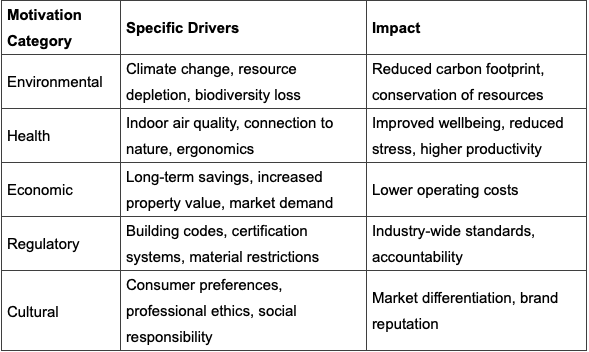
The selection of sustainable material plays an important role in this. The use of renewable materials like SC-certified wood, fast-growing bamboo, and natural cork offer biodegradable alternatives with lower embodied energy than conventional steel or concrete (Fernandes et al., 2021).Recycling and reusing should be done for sustainable solution. Moreover, proper srutinization of recycled materials is must. Moreover, use of passive design strategies like ventilation, greenery may help in reliance on artificial systems and thus promote mental health and productivity.
By prioritizing non toxic materials and improved air quality can help in reduction of health related problems with better learning outcomes. Emphasis on local materials support craft tradition with community development benefits. Additionally, use of solar panels and geothermal can further help in reduction of operational demands. Techniques like rainwater harvesting can contribute towards water conservation.
However, besides its various merits, numerous challenges are faced too. Firstly, installations require huge investment which is difficult to justify at initial stages. Secondly, lack of training for sustainable design in designers leads to inconsistent
results. Green washing problem is another serious threat that hinders ecological progress. It misleads consumers by complicating material selection by ignoring harmful aspects of the material. For instance, greenwashing prevents sustainability, as 58% of environmental claims prove misleading (TerraChoice, 2010).
Green Architecture
Green architecture emerged in late 20th century which have now prioritized energy efficiency and provide impetus to ecological sustainability. The 1970s energy crisis and environment movement provided designers to look for alternatives that are eco friendly and emphasize on ecological harmony.
Early pioneers like Lan McHarg designed strategies that was environment friendly.These laid a strong foundation that became a building rock for green architecture. This paradigm shift manifests visibly in material innovation, use of bamboo, recycled steel etc.
For instance , project like Lumi Shala in Bali demonstrates bamboo’s efficiency that provides us with relevancy of using such materials that supports sustainability. Today, certifications like LEED and BREEAM have established benchmarks encouraging innovation.
Examples of Ecological Architecture
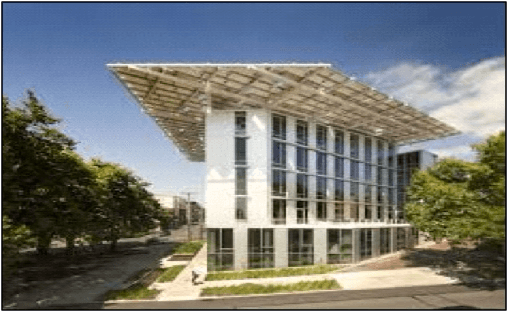
- The Builtt Center (Seattle, USA) is an outstanding example of ecological architecture that generates its own energy with solar panels using rainwater harvesting.
- Makoko Floating School (Nigeria) is built with locally sourced wood and plastic drums, powered by solar panels.
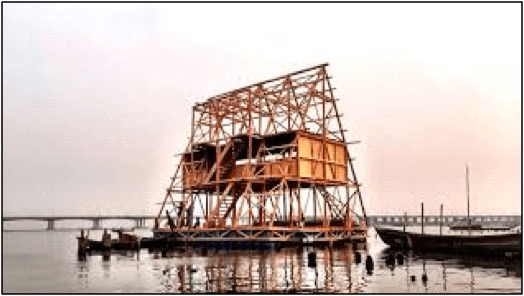
Figure 2: Heinrich-Böll-Stiftung (2016), under Creative Commons.
- Gardens by the Bay (Singapore) integrates plant life and works for climate regulation I urban park setting.
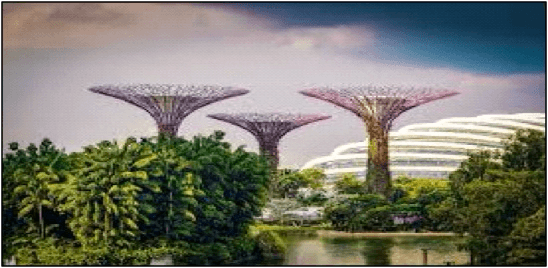
Thus, such models inspire architects to work towards innovation by integrating sustainability with aesthetics and demonstrate practical solutions to climate resilience.
Conclusion
To wrap up, ecological design philosophy has helped me shape design practice, to consider environment protection as foremost priority by ensuring long term impacts. For this use of efficient sustainable materials and techniques will not only promote ecological harmony but also reduce ecological harm. The integration of renewable materials can reduce carbon footprint by promoting healthier environment. Projects like the Bullitt Center and Makoko Floating School provides scalable solutions.
The future of architecture lies in balance: where infrastructure development should also help to nurture planet where sustainability acts as an important tool for innovation and creativity that inspires designers to make earth a better place to live in.
Guest author: Priya

Priya is from Mandi Dabwali, Haryana and shares passion for writing and learning. She enjoys exploring new ideas and always excited to share her thoughts and experiences and always looking to grow and learn more.


Good thoughts
Good Experience